
Of the Shortness of Life
Seneca·about AD 49·106 pages
Shipping in the US is included. Your book ships within about a week, and you get an email the day it does.
Reading counts. Log it in the You.Prjct app, where athletes logged 2,918 minutes of reading this week.
Buying it for an athlete? Send it straight to them: put their address in at checkout.
“Life is long enough, if you know how to use it.”
Seneca · chosen by someone who read it first
Underline it in the book. In the You.Prjct app, a line from this volume meets you on today’s invitation.
A ruled margin beside the text, four lines at the foot of every page, and the Notes leave their last page open under the thing they ask you to do. A chapter opening and a Notes close, as printed.
You say you have no time. Seneca, running an empire, says you have plenty: life is long enough, if you know how to use it. The trouble is what you let take it.
The man who wrote this was, at the time he wrote it, one of the most powerful people alive. Lucius Annaeus Seneca had been recalled from eight years of exile on Corsica to tutor an eleven-year-old boy who would become the emperor Nero, and within a few years of that appointment he was effectively running the government of the Roman empire alongside the commander of the praetorian guard. He is not writing to you from a quiet room. He is writing from inside the most demanding job in the ancient world, about the one thing that job was eating.
Stewart’s 1889 translation. Seneca’s argument is not that life is short but that we are wasteful of it.
- OneWe Are Not Poor in Days11
- TwoThe Purple and the Prisoner21
- ThreeLong Alive31
- FourBusy About Trifles47
- FiveThe Families of the Noblest Intellects59
- SixThey Lose the Day Looking Toward the Night67
- SevenYour Own Mind, Not the Corn-market77

The portrait is printed on the back cover. Turn the book over, above, to meet him.
The outside follows the inside.
You.Prjct is for the extra work: the lift nobody assigned, the hour with a book that nobody sees. The reading sits next to the training on purpose. A barbell does not lie about the body. A book like these does not lie about the rest of you, and the rest of you decides what the training is for.
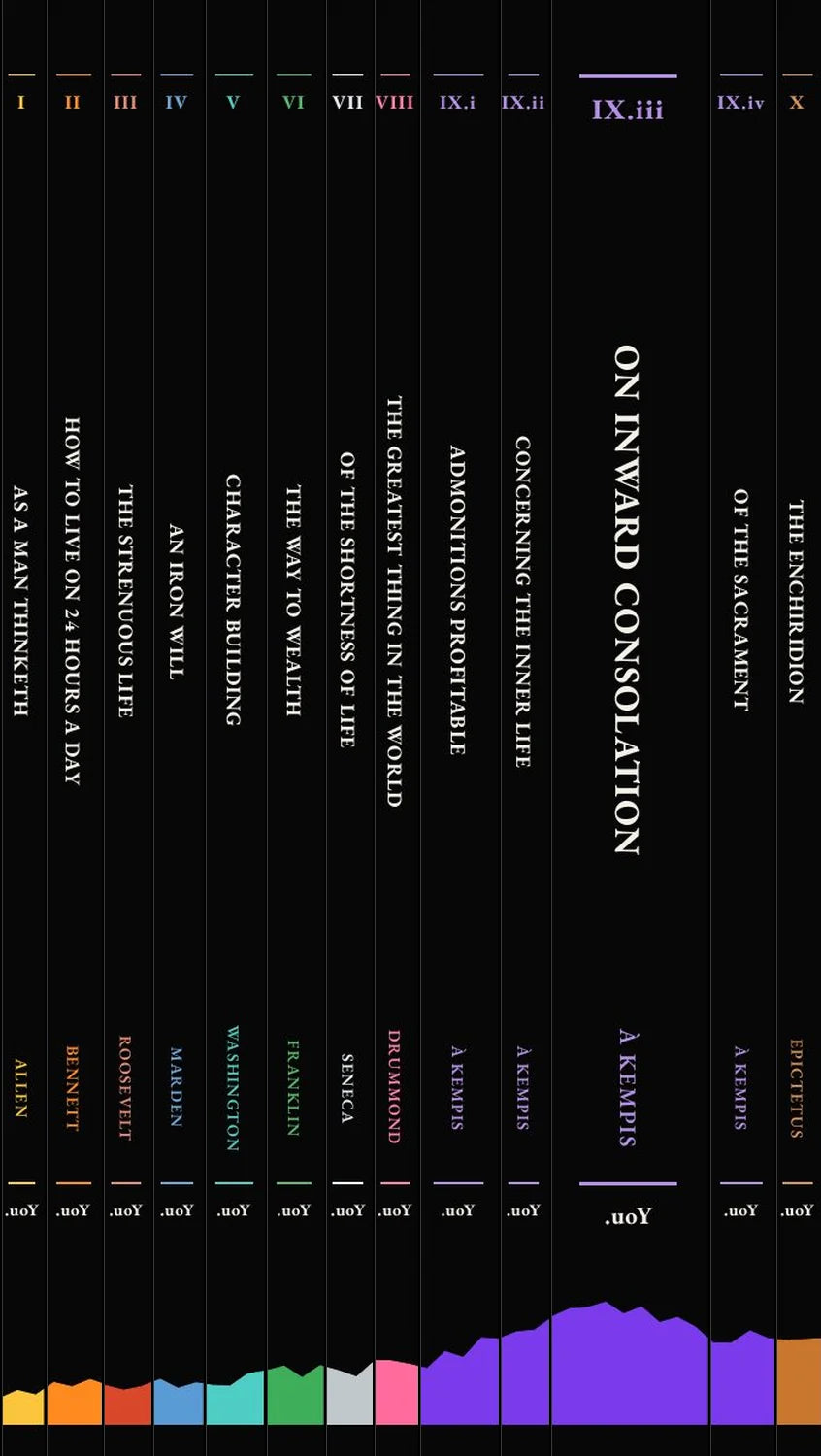
Black covers, a metal emblem, one range across every spine. We made the outside beautiful because of what happens on the inside. A life works the same way: put the interior in order and the rest of it follows. If that is the work you are already doing, these were made for you.
Every one closes with the Notes, and a page left open under the thing they ask you to do. Read the rest with a pen.